
The shape of the future: why square carbon tubes are chosen

In the world of quadcopters, even the smallest details can significantly affect the performance, stability, and durability of the device. One of the key components of the frame is the tubes that form the basis of the drone’s frame.

Why square tubes are changing the rules of the game in quadcopters

Square carbon tubes open up new horizons in drone design and efficiency:

Much easier to assemble: their straight angles allow you to easily connect various structural elements, such as motors, electronics, and other accessories.

They have better bending and torsion rigidity. This provides greater stability and control accuracy during flight, especially under high loads.

The square shape promotes better load distribution. Since the tubes have a larger area of contact with other frame elements, this allows for better shock absorption and reduces the likelihood of breakage even under significant mechanical loads.

This solution has the potential to change the perception of drone design and make them even more reliable, efficient, and technologically advanced.

Where square carbon tubes are used

For quadcopters of various types and purposes, it is important to choose tubes that are ideally suited to the design and operating conditions. For example:

  • Square carbon tube 20x20x17 mm, length 600 mm, its size is ideal for lightweight racing drones (FPV drones), where every gram matters. A tube with this length is suitable for creating frame frames for high-speed models, where high rigidity and stability are required, as well as minimal weight.
  • Square carbon tube 25x25x22 mm, length 500 mm, with a thicker wall thickness and shorter length, is ideal for heavier quadcopters, such as cinematic drones or cargo models. With this size of tube, you can build frames that can withstand higher loads, in particular for heavier cameras, additional batteries or other accessories.

Due to their properties, square carbon tubes allow you to achieve the optimal combination of strength, lightness and aerodynamic qualities.

Square carbon tubes are not just another innovation in the world of drones and not another trend, but a real step forward in the development of drone construction.

Precision at the limits of possibility: CNC milling of carbon and other materials

In modern manufacturing, the accuracy and speed of material processing are of paramount importance. One of the most effective technologies is numerical control (CPU), which allows for incredible accuracy and repeatability of processing.

Among the materials that are becoming increasingly popular, carbon and other composite materials stand out. Working with such materials requires special approaches and equipment.

CNC milling: a technology that changes production

CNC milling allows you to automate processes that previously required significant human effort and time, thereby significantly increasing efficiency and reducing the likelihood of errors.

The essence of CNC milling is that the machine processes the material based on programmed commands. Using special software, the operator sets precise processing parameters, such as the milling cutter rotation speed, feed, cutting depth, and others. The difference from traditional milling is in automation and computer control, which allows achieving significantly better processing results.

Technical nuances for achieving accuracy

Milling is a high-precision method of processing materials that requires proper setup. Here are some technical aspects that are very important:

  • Specific milling cutters are required for each material. For example, for carbon and composites, special carbide tools are used that can withstand high loads.
  • Cutting parameters, such as cutter speed and material feed, must be optimally adjusted. Incorrect settings can cause the tool to overheat or degrade accuracy.
  • To achieve accuracy, machining is usually done in layers, removing small portions of material in a single pass to reduce the stress on the tool.
  • The use of coolants helps to reduce temperature and friction, which is important when machining metals and composites.
  • Choosing rigid machines and properly setting parameters helps to reduce vibrations that can affect machining accuracy.

Tool selection, speed and feed settings, control of cutting depth, as well as temperature and vibration control – all these factors directly affect the accuracy and quality of processing.

The perfect choice for quadcopters: anodized aluminum mounts

Quadcopters have become an integral part of our lives. Today we will talk about one of the best options for quadcopter stands – anodized aluminum stands

Why anodized aluminum stands?

Here are a few reasons why anodized aluminum is the perfect choice for your quadcopter:

  • Gets a protective a shell that makes the material resistant to physical damage, such as impacts or scratches.
  • Acquires additional protection from moisture, salt, and other external influences that can lead to corrosion.
  • Reduces the overall weight of the quadcopter. Lightness is important for maintaining flight efficiency and battery life, but at the same time does not lose strength, ensuring reliability even in the most extreme conditions.
  • The material can be given different colors, which allows you to personalize the appearance of the quadcopter.
  • They are durable and do not require frequent repairs or replacement, which saves time and money on the long-term operation of the quadcopter.
  • They often have greater rigidity and stability compared to plastic or other metals, which allows the quadcopter to better maintain balance during flights.

They not only ensure durability and reliability, but also allow your quadcopter to operate efficiently even in the most difficult conditions.

How to choose the right anodized quadcopter stands?

When choosing anodized aluminum quadcopter stands, it is important to consider the following main aspects:

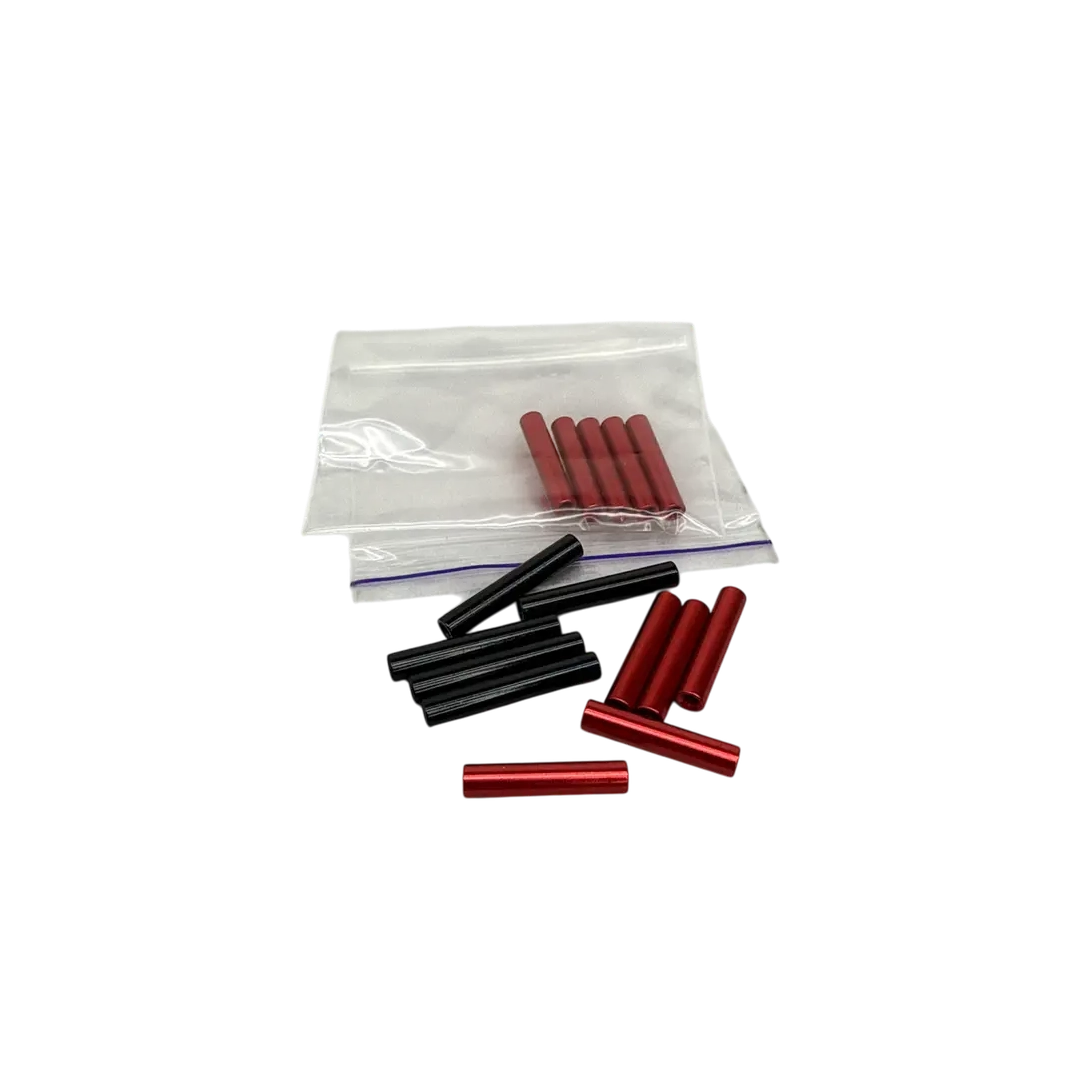
  • Stand size. M3X25 (25 mm) is suitable for quadcopters with a lower weight and compact design, while M3X30 (30 mm) provides more stability and is suitable for larger models where additional support is needed.
  • Weight and strength. Choose racks that will not overload the quadcopter, but will provide sufficient strength. Anodized racks, M3X25 and M3X30, are lightweight, but very strong.

As a result, the choice depends on the specific quadcopter model, your needs and conditions of use.

The choice depends on the size and requirements of your device: shorter racks are suitable for compact models, while longer ones provide greater stability. The right choice of racks improves flight efficiency, reduces the risk of damage and increases the service life of the quadcopter.

Nylon wings: a revolution in the world of propellers

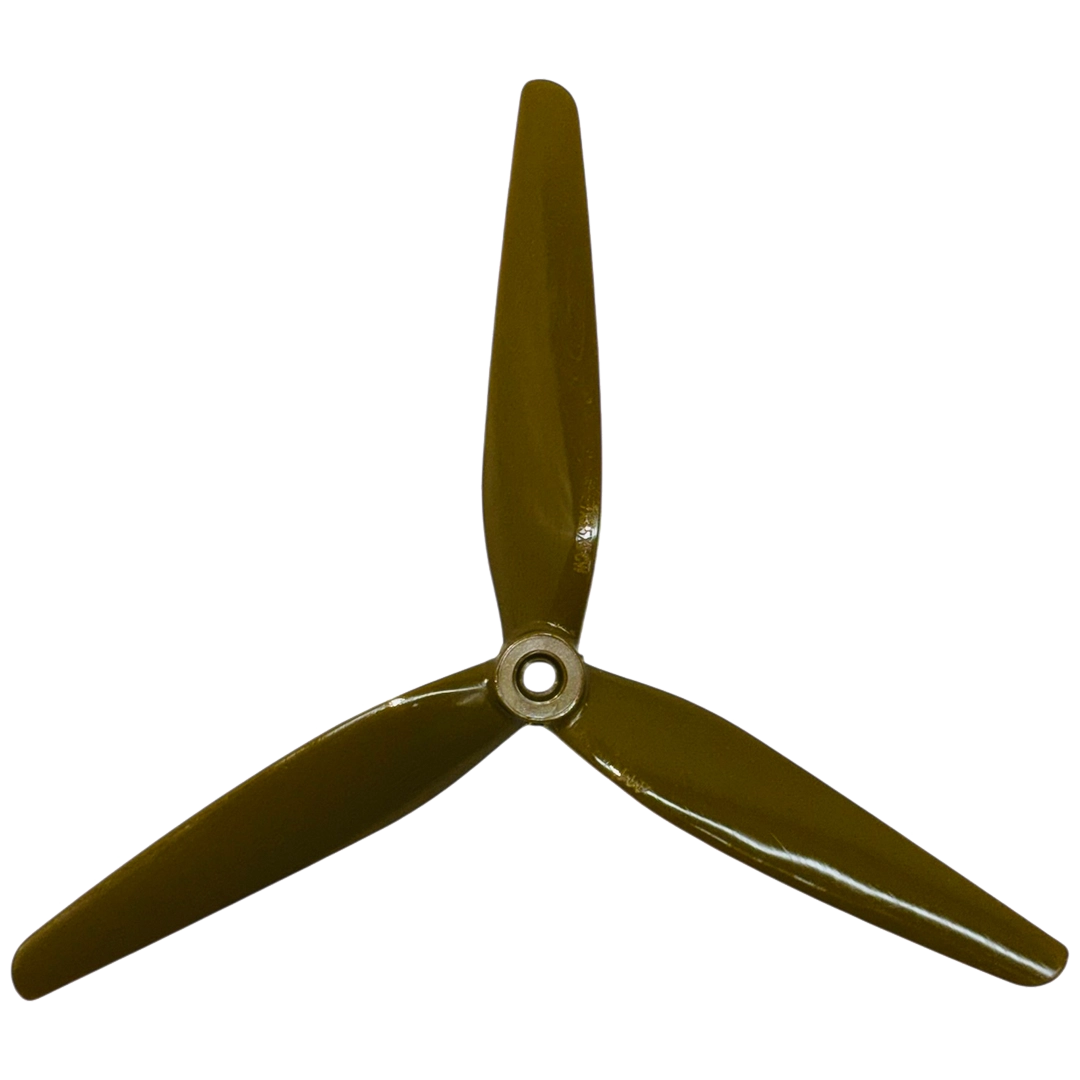
Propellers are the heart of a drone, and the efficiency, endurance, and safety of the device depend on them. With the advent of nylon propellers on the market, a real breakthrough occurred: the new material gave the technique lightness, strength, and endurance that were previously unattainable.

Nylon propellers: what gives them leadership

Nylon propellers quickly gained popularity among drone manufacturers. The secret of their success lies in a unique combination of properties:

  • Extremely lightweight material, which significantly reduces the weight of the entire structure. At the same time, it is strong enough to withstand heavy loads and impacts without significant damage.
  • It tolerates impacts and bends well, returning to its original shape.
  • It is not afraid of moisture, temperature changes and aggressive environments, which makes it an ideal choice for outdoor use in any weather.
  • It is easily combined with other materials (for example, fiberglass or carbon fiber), which allows you to create even stronger and more specialized propeller models.

They confidently occupy their place in the market and, without a doubt, will remain relevant for a long time.

Choosing the right one: the secrets of a quality nylon propeller

Choosing a quality nylon propeller is a task that requires attention to detail. Especially when it comes to the popular nylon propeller size 7×3.5×3 (7 inch diameter, 3.5 inch pitch, three blades). To make your drone work efficiently, it is important to know what to look for:

  • Nylon propellers can be made of pure nylon or have fiberglass or carbon additives for increased strength.
  • The shape of the blades and their number matter. The 7×3.5×3 format means a balanced combination of diameter, pitch, and number of blades.
  • A quality propeller should be well balanced. Even small deviations can cause vibration, which reduces flight efficiency and accelerates motor wear.

Choosing the right propeller is not just about numbers: it is important to pay attention to the quality of the material, balancing, reliability of the manufacturer and compliance with your tasks.

Armed with knowledge about the features of nylon propellers, you will be able to choose the ideal model that will ensure the efficiency and long service life of your equipment.

Materials matter: carbon frames in FPV assemblies

The frame determines the strength of the structure, affects handling, vibration resistance, and the efficiency of the electronics. Today, carbon has become the main material for making FPV frames.

Why carbon?

Carbon is considered the best material for making FPV drone frames, thanks to its unique combination of physical properties:

  • Due to the structure of interwoven fibers, it can withstand high loads without deformation or destruction.
  • Lightweight frame – increases flight time, dynamics and reduces load on the engines.
  • It absorbs small mechanical vibrations well, which has a positive effect on flight stability.

Thus, the use of carbon in FPV frames allows for an optimal balance between strength, weight and operational reliability.

Technical nuances of choice

When choosing a carbon frame for an FPV drone, it is important to consider a number of technical aspects. Let’s consider these nuances using the example of specific frame models:

  • TBS Source HD frame (7 inches), has high rigidity due to thick beams (minimizes vibrations and ensures stable shooting) and a compact and durable design (ideal for long-distance flights).
  • FiberForm frame V2 (10 inches), designed for long-range autonomous flights (up to 20–30 km) due to the ability to install large batteries. It has a reinforced central plate for better load distribution.
  • TBS Source X frame (13–15 inches), has a reliable large-format frame for heavy loads or giant long-range projects and a professional design with the ability to accommodate a large amount of additional electronics.
  • Rama O.S.A. – 10, has a unique frame geometry for a balanced combination of freestyle and long-range flights and the ability to install wide-format cameras and additional equipment.
  • The FiberForm frame (13 inches), has an excellent weight for its size, suitable for both expedition flights and cinematic tasks. Modular design: easy to replace individual elements without disassembling the entire frame.
  • The O.S.A. – 7 (7 inch) frame is optimized for long-distance flights with a good margin of rigidity, while having a compact design taking into account the installation of heavy equipment.

In conclusion, we can say that choosing a carbon frame for an FPV drone is an important step that directly affects the operational characteristics of the device.